
September 2025 Māori Law Review
Ngā Rangahautira x Indigenous Law and Justice Hub in Naarm – Kaea Hudson
Kaea Hudson (Ngāti Hine, Ngāti Awa, Tūhoe) reports on a recent visit by senior Māori law students to the Indigenous Law and Justice Hub at Melbourne Law School.
Ngā Rangahautira took a delegation of senior Māori law students to visit the Indigenous Law and Justice Hub at Melbourne Law School from 18 to 24 September 2025.
In December 2024, Ngā Rangahautira hosted a group of academic staff and students from the Indigenous Law and Justice Hub (“the Hub”) at Melbourne Law School. We shared a kai of hāngī and had the opportunity to kōrero about indigenous law and culture here in Aotearoa (we even convinced some of them to attend the opening of the Living Pā!). Following that connection, and a few hui later, we were invited to make a trip over the ditch to build on those connections.
Our first day began with a visit to the Hub for introductions. We were taken on Billibellary’s Walk around UniMelb where we discussed the indigenous and colonial history of buildings around the campus, to help situate us in people and place. We were lucky enough to get a peek at the 65,000 Years exhibition at the university’s art gallery, which collected work from Aboriginal and Torres Strait Islander artists around the country. We finished the day with a Welcome to Country ceremony from Wurundjeri traditional owners, alongside members of Tarwirri (the Aboriginal and Torres Strait Islander legal professionals’ group in Victoria).
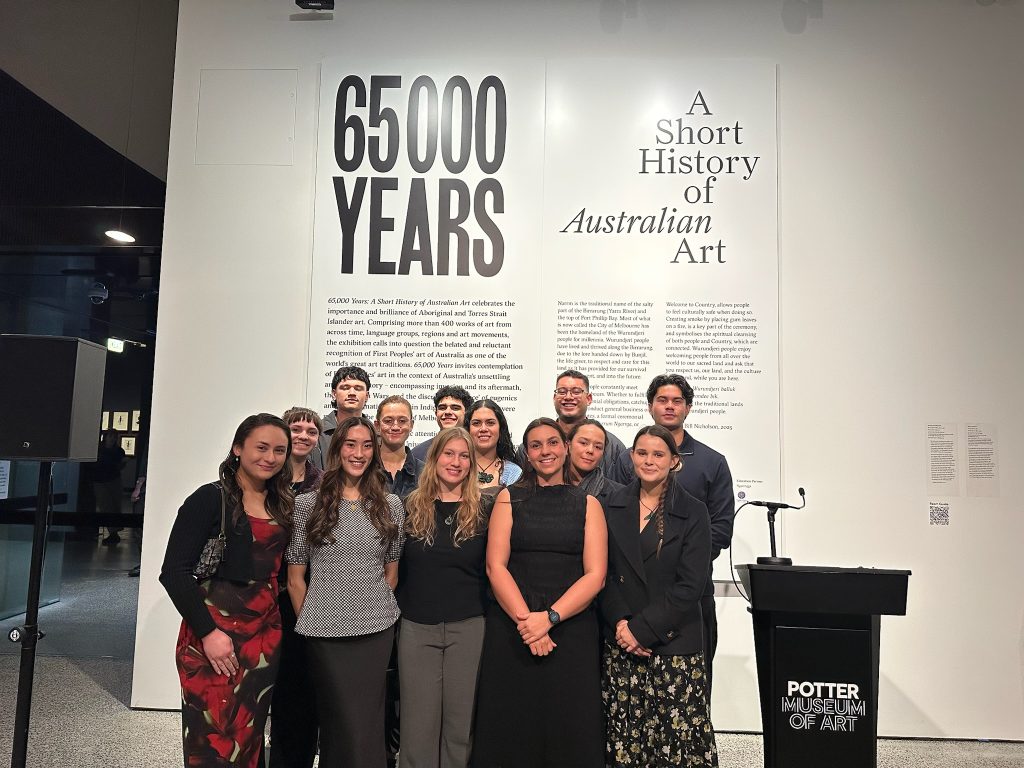
Tuesday was a day of learning with lectures in the Hub on Australian constitutional arrangements, Land Rights, and the ongoing Victoria Treaty Process. We attended part of the inaugural Indigenous Higher Degree Research Summit to support Ngā Rangahautira members who presented on the Te Rauhī i te Tikanga - A Tikanga Companion research project. We finished the night at the cocktail event for the conference back at 65,000 Years exhibition.
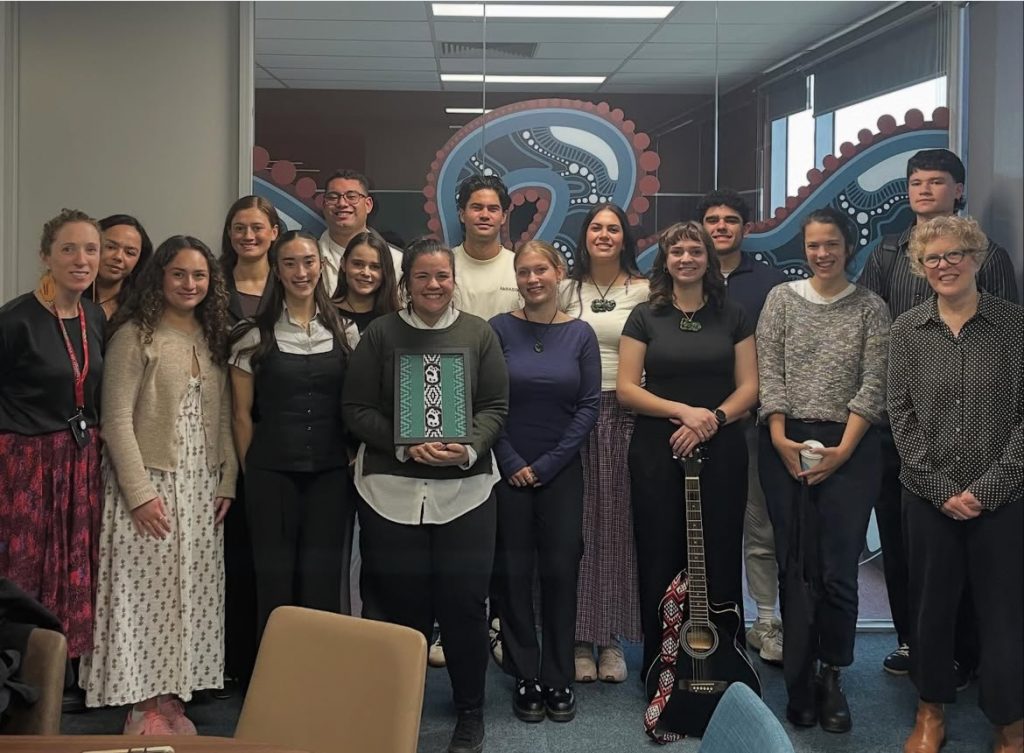
On Wednesday, we went out to Preston to visit VALS, the Victorian Aboriginal Legal Service. We got to hear first hand from lawyers, policy makers, and community workers about the key work of VALS for the indigenous community. That afternoon, we visited the Treaty Authority – the independent body that oversees Treaty-making in Victoria. One of my highlights from this trip was participating in a cleansing/clearing ceremony and adding to their timeline of significant moments in Australian and international indigenous history. I added a cheeky post-it about the legal personhood of Te Urewera - a measure that has been replicated in Australia with the legal personhood of the Birrarung (Yarra River).
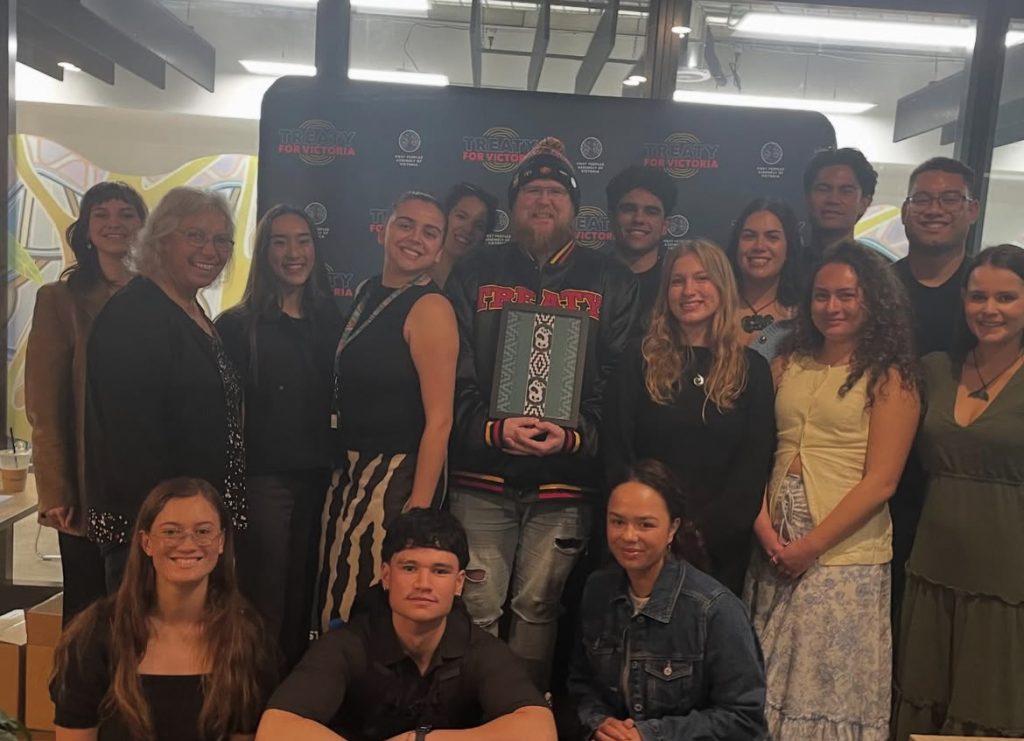
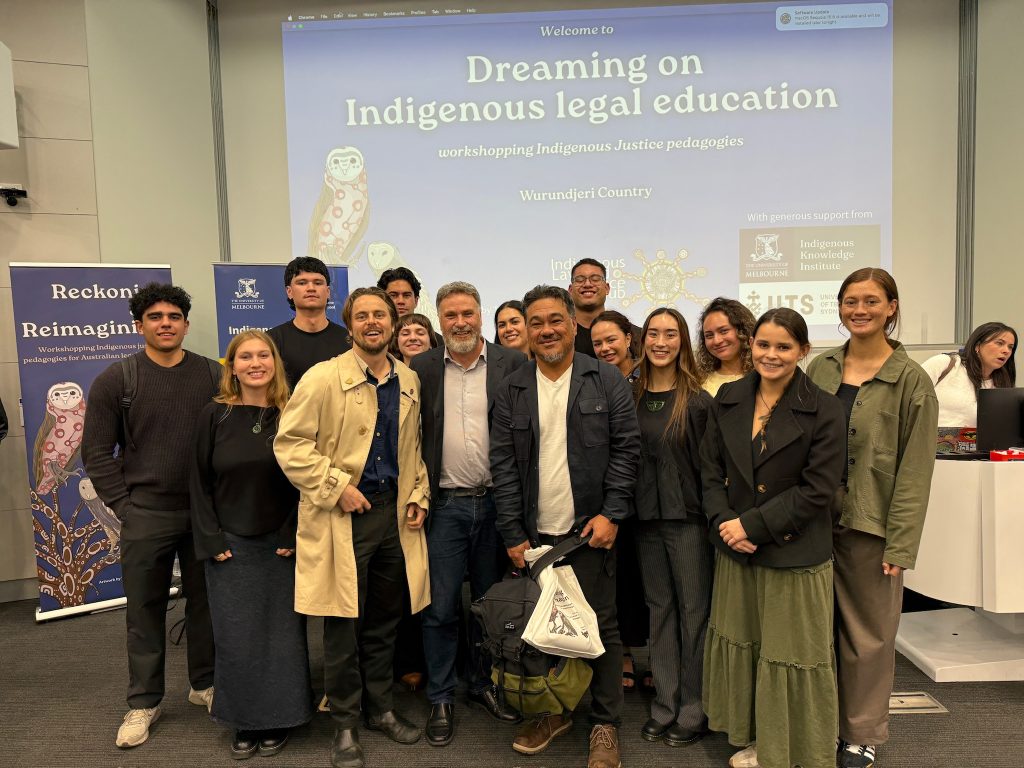
Thursday, we started in the Hub and heard from the Director, Maggie Munn, of the First Nations Justice team at the Human Rights Law Centre. After that, we caught the tram to the First Peoples’ Assembly of Victoria – the representative body of Treaty for Victoria. That night, we heard from a panel about Dreaming on Indigenous Legal Education, including from our own Dr Carwyn Jones. It was so interesting to hear everyone’s thoughts on indigenising legal education - and to sing them a waiata too!
On the final day, we spent the afternoon with our whānau from across the Moana Nui-ā-Kiwa. The afternoon began with presentations from Pasifika academics at the Oceania Institute about Pese Sāmoa and Pacific climate lawyering at the International Court of Justice. We ended with a kava and talanoa session at Te M’aneaba with the UniMelb Pacific Islands Students Association. We shared kōrero and brought our guitar to share some waiata too. To close our programme, we performed a bracket for the team at the Hub who looked after us during the week, to share our thanks and conclude on a high note.
This trip presented an invaluable opportunity to learn and share in Aboriginal and Torres Strait Islander law and culture at the Melbourne Law School and wider Victoria area. Following the 2023 Voice to Parliament and Treaty for Victoria, indigenous rights are coming to the forefront of the Victorian social conscience. I know that we will forever treasure these learnings from the time we spent in Naarm, and the people we met who facilitated our learning journey.
